



Together with Zenner, the City of Lünen has implemented a smart radiator thermostat control solution in its town hall. Significant savings potential was identified after only a short period of operation.
What are the current challenges facing the building sector?
An analysis by the German Energy Agency shows that approximately 35% of Germany’s total final energy consumption is attributable to buildings. Rising energy prices and the need to significantly reduce CO₂ emissions in the building sector are placing increasing emphasis on the energy efficiency of buildings.
Smart radiator thermostats that automatically regulate room temperatures via the Internet of Things (IoT) support these efforts and can help reduce energy losses. A practical example is provided by the City of Lünen, which, together with Zenner, opted for smart radiator thermostat control using B.One BuildingLink.
Intelligent Radiator Control with LoRaWAN
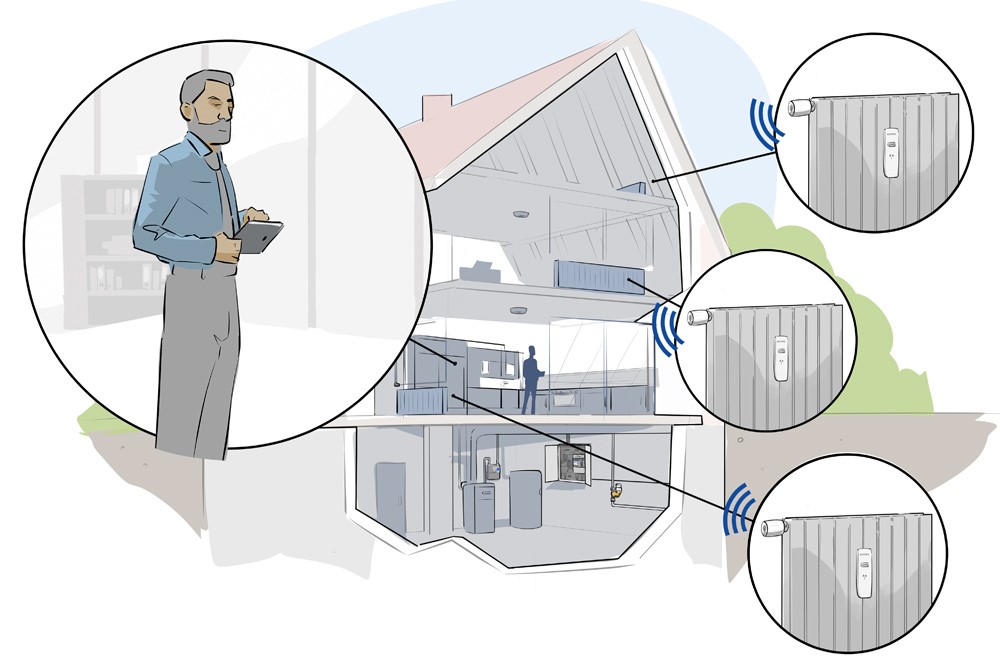
B.One BuildingLink is an IoT solution for the intelligent control of radiator thermostats via LoRaWAN. It enables centralized, demand-based temperature control at room, floor, or building level, thereby helping to reduce energy consumption and CO₂ emissions.
“B.One BuildingLink helps reduce CO₂ emissions and provides complete transparency and control over heating behaviour across all properties. This enables targeted and efficient heating,” explains René Claussen, Head of the Metering Systems, IoT and Digital Solutions Division at Zenner.
The IoT solution is ideally suited for efficiently managing heating systems in public buildings, schools, and office buildings via LoRaWAN networks.
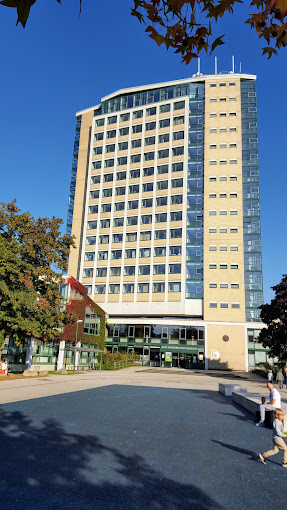
Smart Radiator Control in Lünen Town Hall
Since 2024, the City of Lünen has been focusing intensively on the topic of Smart City development. Through its own Smart City strategy, the city aims to improve quality of life, with a particular emphasis on sustainability and climate protection. The introduction of a smart thermostat control system in the town hall marks an important step in the expansion of urban infrastructure.
A total of 250 smart radiator thermostats and eight gateways have been installed in the building. The thermostat data is collected and visualized in B.One BuildingLink. Dashboards allow room temperature and humidity levels to be monitored at any time, while thermostats can be centrally controlled.

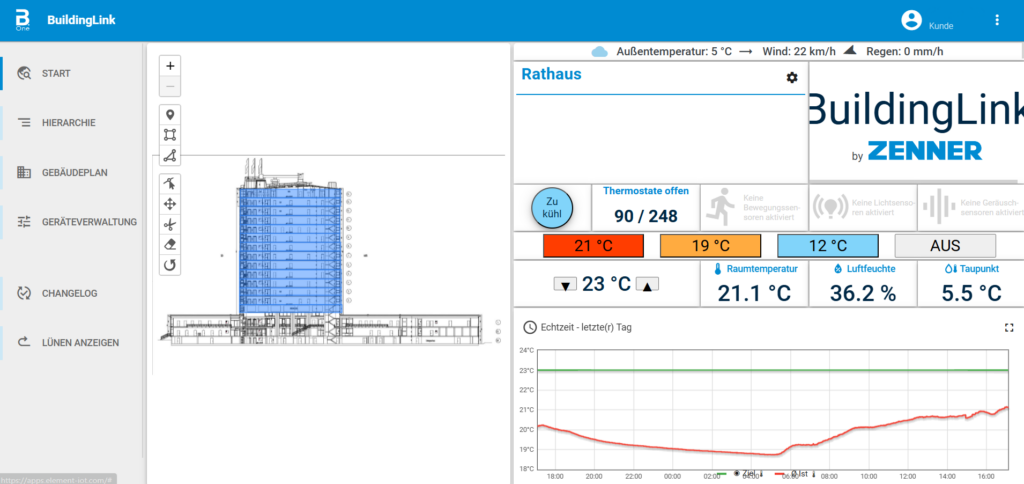
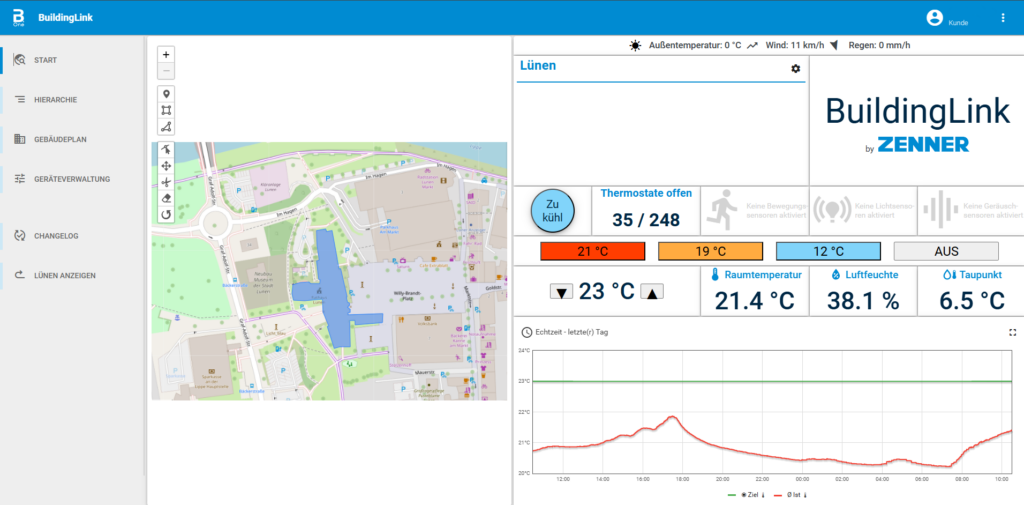
Actual-versus-target monitoring provides the city with real-time visibility into deviations and highlights optimization opportunities. With just one click, room temperatures throughout the entire building can be adjusted. Those responsible also receive an overview of all properties, can monitor key performance indicators, view all deployed devices, and benefit from predictive maintenance functions.
“The implementation of smart thermostats via LoRaWAN with Zenner has demonstrated how existing buildings can be operated significantly more efficiently through retrofit IoT solutions. During the heating season, we were able to reduce consumption in some facilities by up to 30 %. For us, the system is an important component of our Smart City concept for urban infrastructure and actively contributes to making our city more sustainable and future-oriented,” reports Gregor Spanke, Smart City Coordinator of the City of Lünen.
The City of Lünen demonstrates that significant savings potential can be unlocked through smart radiator thermostats and B.One BuildingLink. Centralized control via LoRaWAN can reduce heating costs and optimize building operations. In addition, the solution lowers energy consumption and CO₂ emissions, thereby making an important contribution to climate protection.
The City of Lünen’s project contributes to the following UN goals: