






Stadtwerke Altdorf has opted for smart monitoring of its local network transformer stations in the urban area of Altdorf, in collaboration with ZENNER. This means the public utility company can pinpoint faults faster, identify peak loads quickly and plan maintenance work in a more targeted way.
What are the current challenges facing electricity grids?

The energy transition is placing growing demands on power distribution networks. E-mobility, charging infrastructure, the expansion of renewables and the increasing electrification of the heating sector are resulting in significant changes to grid load flows. Whereas households and companies mainly used to draw electricity from the grid with relatively consistent load profiles, grid conditions now fluctuate to a far greater extent. As well as being consumed, energy is also fed into the grid on a decentralised basis.
This is making it much more challenging for grid operators to ensure grid stability at all times and to detect faults at an early stage. To prevent supply outages and identify critical conditions in good time, the grid needs to be more transparent. The digitalisation of local network transformer stations plays a key role in this context.
How does Stadtwerke Altdorf monitor local network transformer stations using LoRaWAN?
Many local network transformer stations still undergo maintenance at fixed intervals, and faults are often only detected during these manual interventions. In many places, there is also a lack of real-time data to show the latest grid conditions. The fact that numerous transformer stations are not yet networked means notification of faults is not provided automatically.
Consequently, there is often a delay in detecting such faults, and a considerable amount of effort is involved in locating them. Using a LoRaWAN wireless network, along with appropriate measurement and transmission technology in these stations, the necessary data relating to grid conditions can be transmitted to IoT platforms such as ZENNER’s B.One element iot. This data can then be prepared and processed in line with the specific use case for monitoring by grid operators.
Smart monitoring of transformer stations thanks to LoRaWAN® creates the necessary transparency for efficient grid management. Grid operators can detect critical operating conditions at an early stage, before faults occur. This means costly system damage – and, in the worst-case scenario, power outages – can be prevented. It also boosts grid stability. What’s more, the retrofit sensor technology is both inexpensive and easy to install.
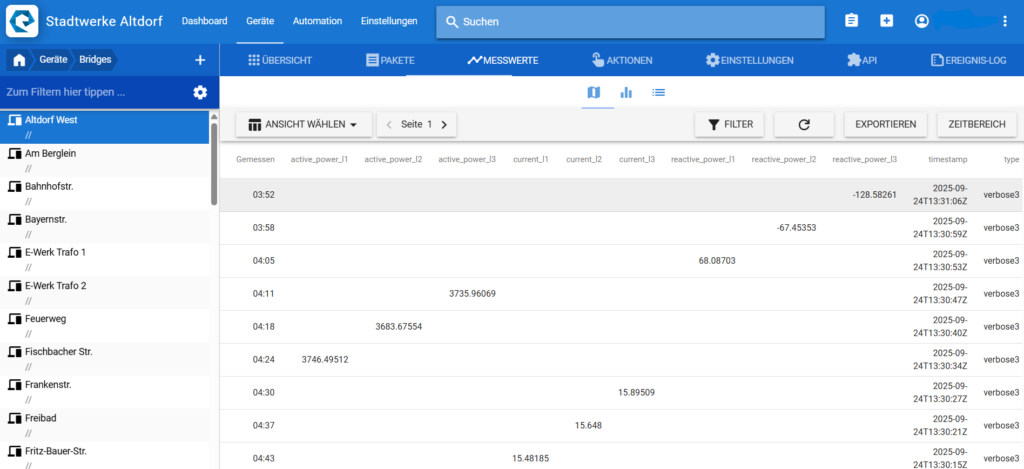
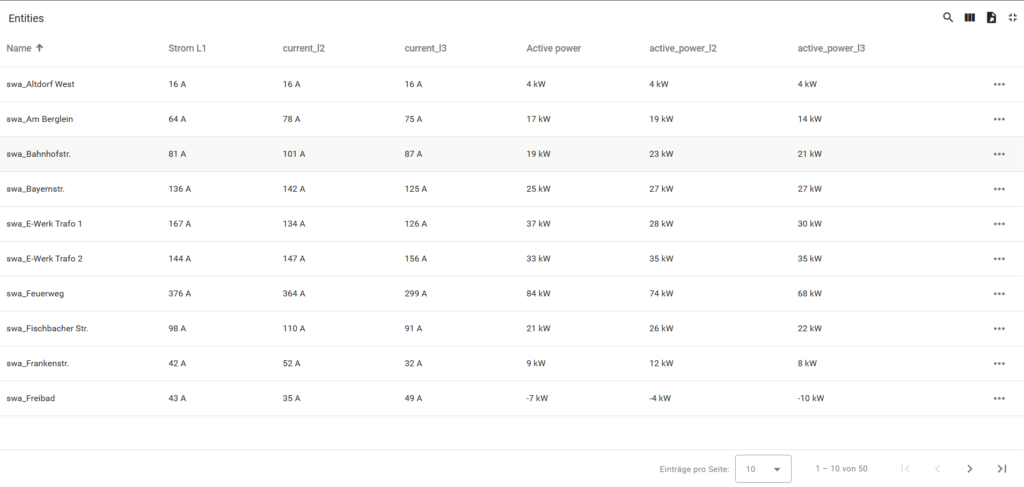
How Stadtwerke Altdorf is making its electricity network more transparent using LoRaWAN
According to Stadtwerke Altdorf GmbH, the total length of its low-voltage grid amounts to 280 kilometres. Around 60 million kWh is drawn from this grid every year. The public utility company supplies electrical energy to around 4,800 service connections in the urban area of Altdorf.
To improve grid transparency, Stadtwerke Altdorf has digitalised its transformer stations in collaboration with ZENNER. Out of a total of 80 stations, 50 have been equipped with smart LoRaWAN® transmission technology. This is connected directly to the transformer’s measurement technology, thereby
ensuring efficient and reliable transmission of the data collected.
“Using LoRaWAN® as a retrofit solution for our local network transformer stations means we now have direct insight into their operating status and are no longer working blind. We obtain live data and can therefore react much faster when something isn’t as it should be,”
explains Jörg Paulus, Assistant Manager Electricity Grid Operation / Energy Data Management at Stadtwerke Altdorf GmbH.

“As ZENNER’s project manager, it was especially exciting for me to see how we were able to work with the public utility company to drive forward this digitalisation process. Our close partnership not only resulted in us creating genuine added value for grid management – we also learned a lot from each other as a team. It’s really great to see how an idea delivers tangible benefits. This kind of thing is what makes innovative work on grids so enjoyable,”
adds Patrick Leiner, Senior Project Manager IoT at ZENNER.