
Water: The lifeline of Smart Cities
Published: 11. Jun 2026
Water has always been the foundation of human civilisation. Most early advanced civilisations originated on rivers that provided them with drinking water, food and fertile land, while also serving as transportation and trading routes. Proximity to water helped ensure their survival, growth and development, and it continues to influence the structure of settlements to this very day. Extreme weather events, increasing periods of drought and ever lower groundwater levels are putting cities worldwide under pressure. These factors often determine whether water supply, wastewater disposal and flood protection measures are effective or are stretched to their limits.
Integrated water management
Especially nowadays, in the smart city context, water plays a key, strategic role. It’s no longer about simply supplying water – it’s much more about integrated, data-based management for a vital resource in the face of changing conditions.
Climate change is now a particularly important issue when it comes to water management. More frequent periods of drought and lower groundwater levels are making the consequences of global warming increasingly real. At the same time, heavy rainfall events are leading to more frequent flooding. This means municipalities and utility companies are facing new challenges besides ensuring the availability of water. They also need to consider how to coordinate the distribution, storage and drainage of water.
Rainwater, wastewater and drinking water are therefore no longer being viewed in isolation. Instead, they are being linked intelligently. Concepts such as the “sponge city” are becoming increasingly important. This concept actively integrates water into urban planning – by using expanses of water, greening and evaporation effects to cool urban heat islands, for instance. At the same time, intelligent drainage systems are helping to prevent flooding in the event of heavy rainfall.
Water management as critical infrastructure
In cities, the supply of water is the foundation of municipal public services. The absence of a reliable supply of drinking water and effective wastewater disposal poses a risk to health, the economy and quality of life. In smart cities, this means water management is regarded as part of the closely networked critical infrastructure, along with energy supply and mobility. Since all these systems are interdependent and are also affected by climate change, one key goal takes centre stage – resilience. In other words, water systems need to be resistant to climate change, extreme weather events, environmental pollution and other adverse effects. It’s also crucial that operations can be rapidly restored after any disruption.
This is where the European Water Resilience Strategy comes in. For example, it defines water losses as a systemic loss of efficiency in the urban water system, one that has both ecological and economic effects. The strategy also sets out specific areas of action. Besides modernising the water infrastructure, these first and foremost envisage using digital and smart technologies. Examples include real-time network monitoring, use of IoT-based sensor technology, and automated leak detection. The introduction of these digital technologies is referred to as the “smart water rollout”.
Digitalisation as a key technology
The digital transformation is creating new challenges. In the first instance, this relates to infrastructures – both the actual water networks and the communication networks that are used. This is another area where resilience is becoming increasingly important.
Digital technologies are being used in smart cities to manage water more efficiently. Sensors, data platforms and intelligent control systems make it possible to monitor water networks and technical facilities in real time. Leaks can be detected faster, pumps operated in line with demand and water flows optimised. This reduces water losses, costs and energy consumption, while also boosting security of supply and resilience. In other words, a stable, reliable flow of data is just as important as pipework and pumps.
Using a vital resource more sustainably
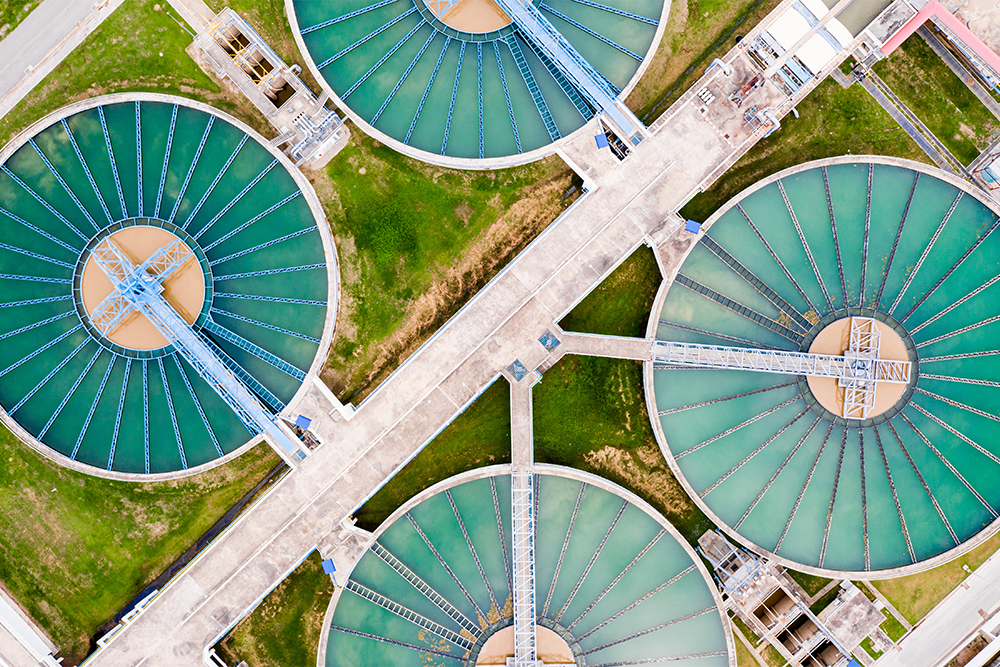
A further aspect to consider is that water has now also become a key lever for sustainable urban development. Thanks to digital consumption measurement and data-based analyses, cities and communities can systematically control and reduce their water consumption. Intelligent meters and smart metering systems make consumption transparent – not just once a year, but at frequent intervals. In this context, reusing treated water for industrial processes and the irrigation of green spaces is becoming more important.
In today’s cities, this means water is much more than just a supply medium. It is an integral part of intelligent, sustainable and resilient systems – networked, digital and in step with the environment and society. This being the case, the water infrastructure no longer ends at the house connection. Human behaviour is also becoming part of the system. City dwellers can use digital applications to track their water consumption and report leaks directly. Transparent data creates trust, encourages people to be more aware of how they are using this natural resource and, in this way, contributes to a reliable water supply.
From the European Blue Deal to SDG 6
To ensure the long-term availability and quality of water, policymakers are increasingly turning to binding regulatory frameworks. This approach currently centres on multi-level interaction between EU regulations such as the EU Drinking Water Directive and national legislation such as Germany’s Drinking Water Ordinance. The objective of the EU’s European Blue Deal is to raise the sustainable use of water to a strategic level that is similar to that of climate protection under the European Green Deal. The goals of this strategy are to safeguard the availability of water, protect resources, invest in infrastructure and ensure more efficient usage thanks to innovation and digitalisation. In times of climate change, holistic, preventive water management can play a big part in achieving these goals.
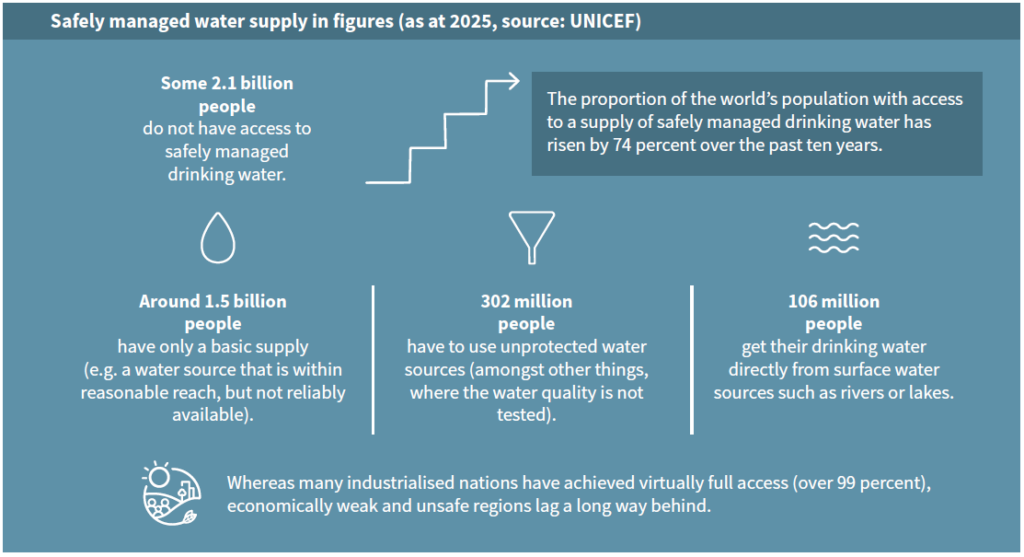
Although these requirements relate primarily to Europe and Germany, it is still important to consider the situation worldwide. The global supply of drinking water has improved in recent years, but assured access to water remains one the world’s biggest challenges. Quality, availability and social inequalities are key problems when it comes to achieving one of the UN’s Sustainable Development Goals – SDG 6 (“water for all”).
Digital water management solutions support various goals,
including the following UN SDGs: